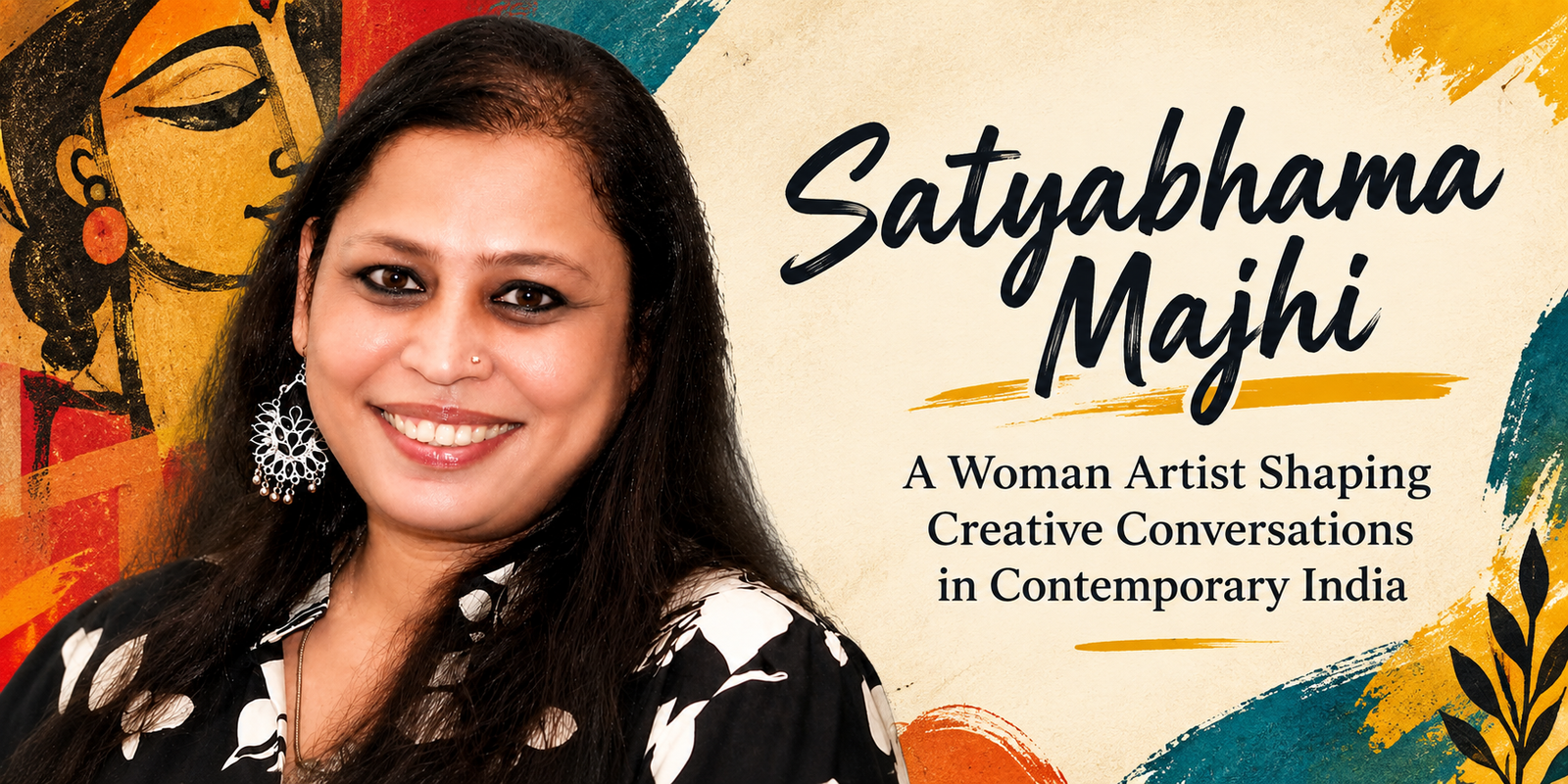
Art does not always begin with extraordinary events. Sometimes it begins with an ordinary street, a familiar face, a household activity, a journey, a tree, a festival or a moment that might otherwise pass unnoticed. For contemporary Indian artist Satyabhama Majhi, everyday life has been an important source of artistic observation and reflection.
Based in Bhubaneswar, Odisha, Majhi has developed a multidisciplinary practice encompassing painting, sculpture, installation, photography, mixed media, public art and community-based art. Across these forms, her work has repeatedly returned to the experiences of people and the environments in which they live.
Her approach demonstrates how ordinary moments can become meaningful subjects for contemporary art when they are observed carefully and understood within their social and cultural context.
Looking Closely at Everyday Experience
The everyday world is full of visual information. People move through streets, work in homes and fields, interact with one another, celebrate festivals and develop relationships with particular places. For an artist, these experiences can provide an extensive source of material.
Majhi’s artistic interests include people, places, urban transformation, cultural memory and changing environments. Rather than separating art from ordinary life, her practice creates a connection between the two.
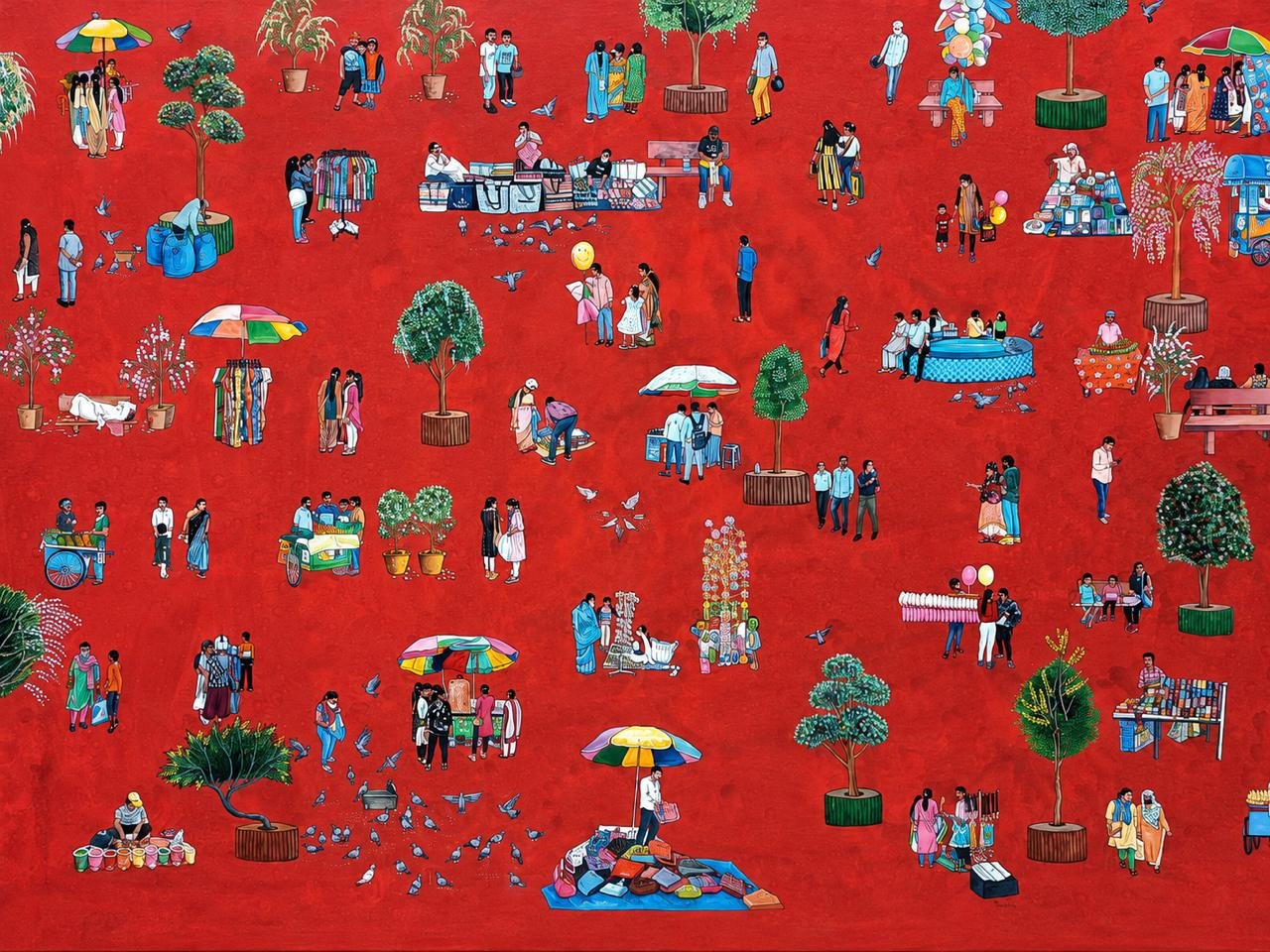
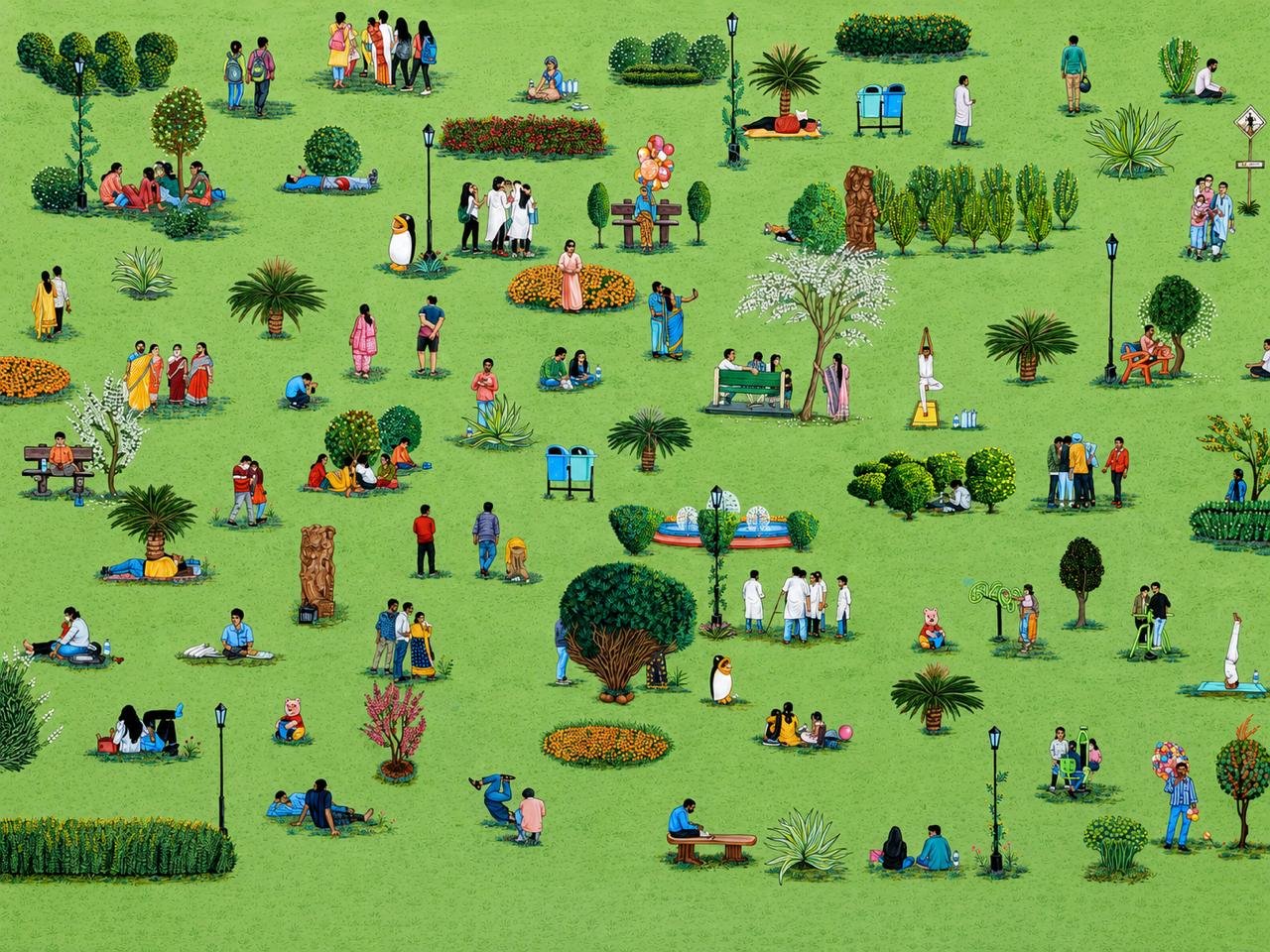
This perspective is particularly relevant to her interest in urban life. Living and working in Bhubaneswar has allowed her to observe the city’s changing character and the experiences of the people who inhabit it.
Buildings may change, neighbourhoods may develop and public spaces may be transformed, but everyday human experiences continue to leave traces of memory.
The City as a Living Subject
Bhubaneswar provides an important setting for understanding Majhi’s artistic outlook.
Like many growing Indian cities, it contains multiple layers of experience. Traditional cultural practices exist alongside modern buildings and rapidly changing urban environments. Old neighbourhoods interact with new developments, while everyday activities continue within an increasingly modern landscape.
For an artist, such a city can become a constantly changing visual subject.
Majhi’s interest in urban life is not limited to architecture. People are central to the experience of a city. Markets, streets, neighbourhoods and public spaces become meaningful because of the human activities that take place within them.
This emphasis on people helps her approach urban transformation through the perspective of lived experience.
Memory as an Artistic Resource
Everyday experiences often become memories long before people recognise their artistic value.
A childhood journey, a familiar neighbourhood, a family activity or a particular landscape can remain in the mind for years. When an artist revisits such experiences, memory can become a source of visual interpretation.
Majhi’s practice includes an interest in cultural memory and personal observation.
Her work demonstrates how memories can be transformed rather than simply documented. The artist may select certain details, alter their relationships and combine different experiences to create a new visual composition.
In this process, memory becomes an active creative resource.
Observing People Without Reducing Them to Subjects
Majhi’s community-based work adds another dimension to her interest in everyday life.
Her engagement with rural communities, urban neighbourhoods, schools and indigenous communities has involved observation and listening. These experiences encourage a more participatory understanding of artistic practice.
This is particularly important when representing people whose lives are connected with distinctive cultural traditions.
The artist’s role is not simply to observe from a distance. Long-term engagement can create a deeper understanding of how people relate to their surroundings, traditions and everyday activities.
This approach allows human experiences to become part of an artistic dialogue rather than merely serving as visual subjects.
Children and the Art of Observation
Majhi’s work with children provides a particularly interesting example of her belief in observation.
Over approximately fifteen years, she has been involved in art education and workshops with children in schools and educational communities. Her approach has encouraged children to draw from observation, memory and personal experience instead of simply copying predetermined images.
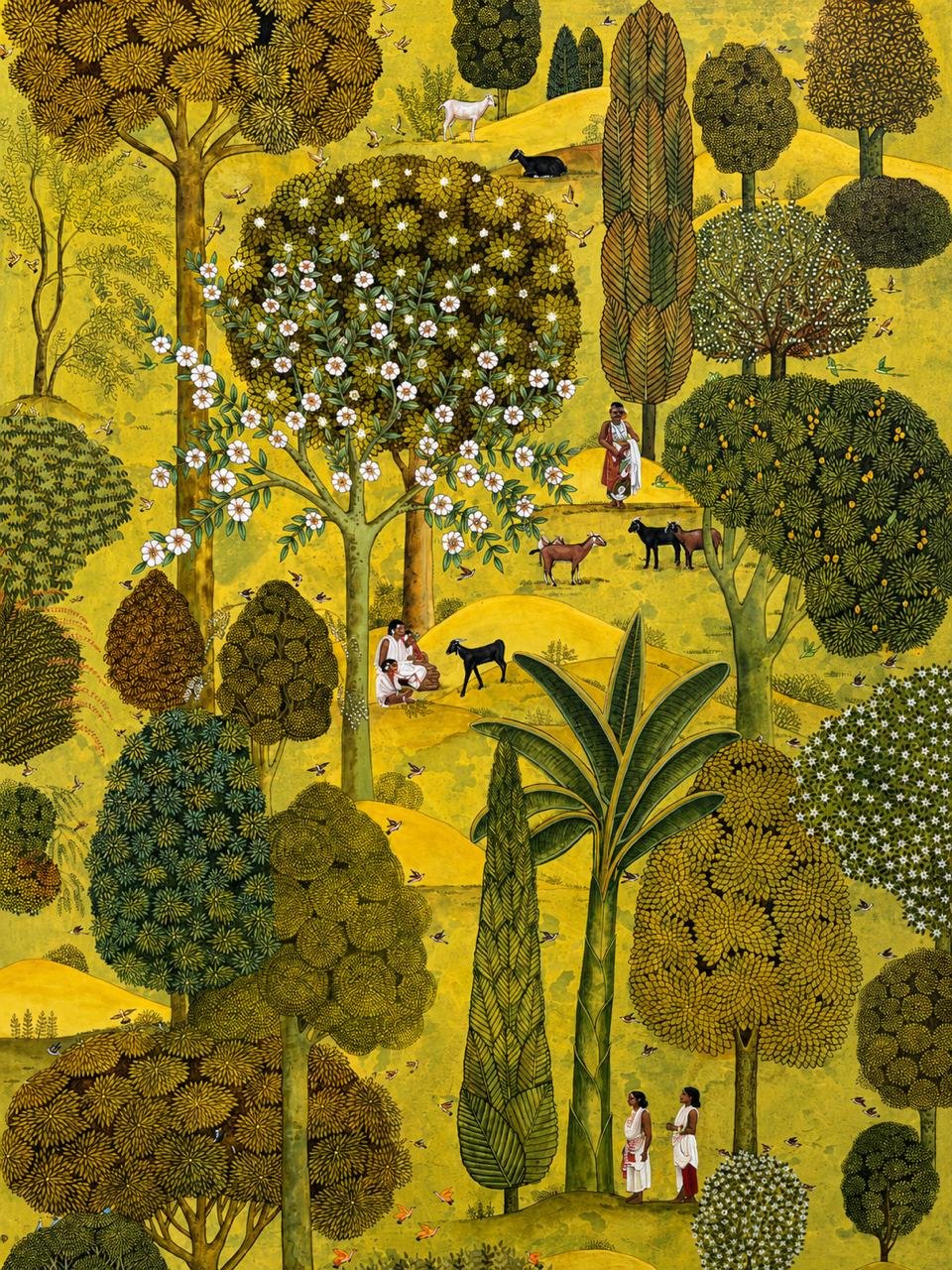
The subjects can be remarkably ordinary: household activities, trees, village journeys, festivals, animals and personal memories.
Yet these subjects can become powerful because they are connected to the child’s own experience.
This philosophy also reveals something about Majhi’s broader artistic outlook. Art does not necessarily require an extraordinary subject. It requires attention, curiosity and the ability to see meaning in one’s surroundings.
From Personal Memory to Shared Experience
An interesting characteristic of everyday-life art is that personal experiences can become universally relatable.
One person may remember a particular village road, while another remembers a childhood journey through a city. The details differ, but the emotions of movement, belonging, family and memory can be shared.
Majhi’s interest in everyday experience creates space for this connection.
Her visual storytelling can therefore operate at two levels. It can remain connected to specific cultural and geographical environments while also addressing broader human experiences.
This balance between local detail and universal emotion is one of the strengths of observational art.
Everyday Life and Cultural Change
Ordinary life also provides evidence of social change.
Changes in clothing, buildings, occupations, transportation, public spaces and patterns of interaction can gradually transform a community. These developments may appear insignificant when considered individually, but together they reveal larger changes in society.
Majhi’s interest in urban transformation and cultural memory allows her to examine these shifts.
Her art can be understood as a way of paying attention to what happens during periods of change—not only major historical events, but also the small changes that gradually reshape people’s daily lives.
The Relationship Between People and Place
Majhi’s work repeatedly connects individuals with the places they inhabit.
This relationship can be seen in her urban work as well as in her engagement with Niyamgiri and the Dongaria Kondh community.
A place influences people’s experiences, while people also give meaning to that place through their activities, memories and traditions.
A village is not simply a collection of buildings. A city is not simply a collection of roads. A landscape is not simply a geographical formation.
Each contains stories.
For an artist, these stories can become visual material.
From Observation to Contemporary Art
Majhi’s ability to work across multiple mediums allows her to translate everyday observations in different ways.
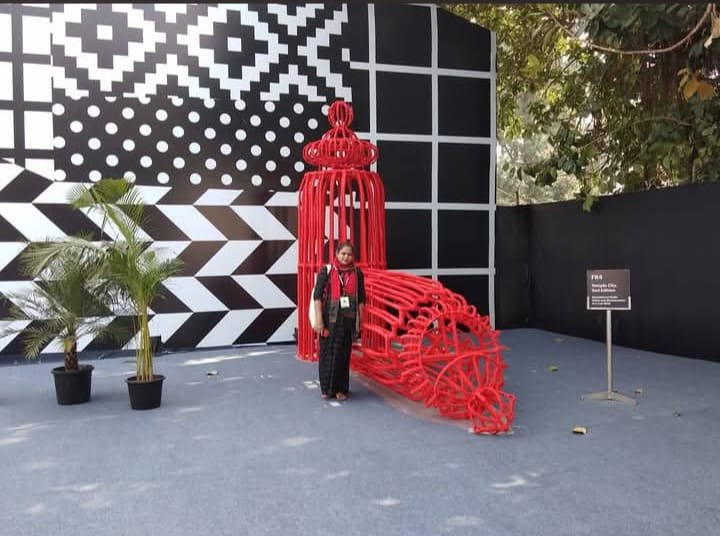
Painting can capture people, environments and memories through colour and composition. Photography can preserve moments and details. Installation can transform an environment into an artistic experience. Public art can bring visual narratives into shared spaces.
The medium changes, but the underlying process can remain connected to observation.
This is one reason her multidisciplinary practice is important. Different artistic forms allow different aspects of everyday experience to become visible.
Everyday Stories in Public Spaces
Her public-art practice extends the idea of everyday storytelling beyond the gallery.
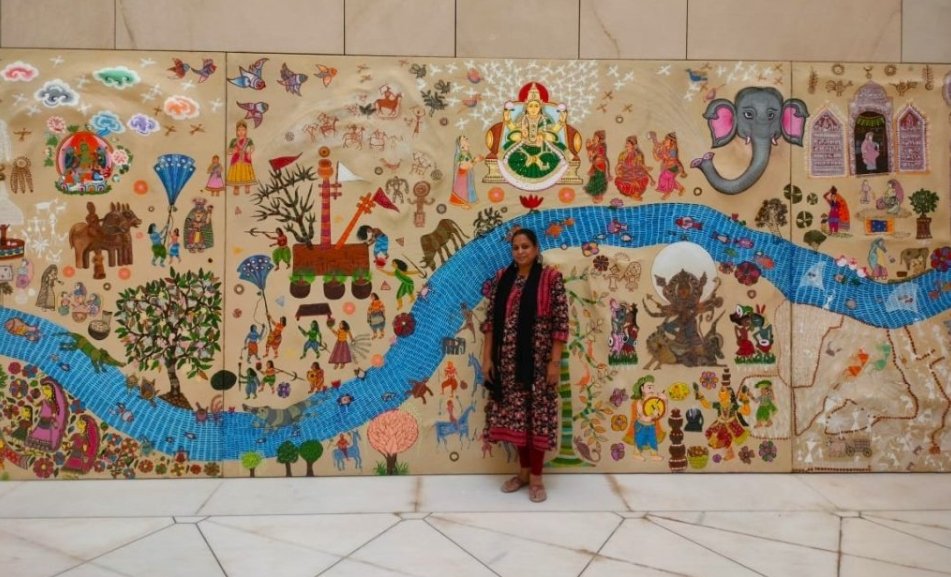
Large-scale murals and public interventions in Odisha have brought art into streets and neighbourhoods. In such spaces, people encounter artworks as part of their ordinary routines.
The relationship between art and everyday life therefore becomes direct.
A person may not consider themselves an art enthusiast, yet they can encounter a mural while walking to work, travelling through a neighbourhood or visiting a public place.
This makes public art an important extension of an artistic practice concerned with ordinary human experience.
The Value of Paying Attention
At the heart of Majhi’s approach is the value of paying attention.
Artists often transform what they see into something that encourages others to look again. A familiar place may appear different when represented through an artist’s perspective.
The process can make viewers reconsider their own surroundings.
A tree, a street, a group of people or a changing neighbourhood can become a reminder that everyday environments contain histories and emotions.
In this way, art can make the ordinary visible.
A Practice Rooted in Human Experience
Satyabhama Majhi’s interest in everyday life connects many parts of her artistic journey.
Her urban paintings, community projects, educational workshops, public-art initiatives and cultural engagements may take different forms, but they share an emphasis on experience and observation.
Her work suggests that contemporary art does not always have to look toward distant or extraordinary subjects. The world immediately around us can provide equally complex material.
People, places, memories and everyday activities can reveal questions about identity, change, culture and belonging.
Conclusion
Satyabhama Majhi’s artistic practice demonstrates the creative possibilities hidden within everyday life.
Through careful observation of people, places and changing environments, she transforms ordinary experiences into subjects for contemporary artistic exploration. Her interest in urban life, cultural memory, community experiences and personal observation allows her work to connect individual moments with wider questions about society and culture.
Her work with children further reinforces the importance of looking closely at one’s surroundings. By encouraging young people to draw from memory and personal experience, she promotes an understanding of art as a form of observation rather than simple imitation.
From the streets of Bhubaneswar to community environments and public spaces, Majhi’s artistic journey demonstrates that meaningful stories can exist everywhere.
Sometimes, the most powerful artistic subjects are not the extraordinary events of history, but the ordinary moments that quietly shape how people understand their lives, communities and sense of place.