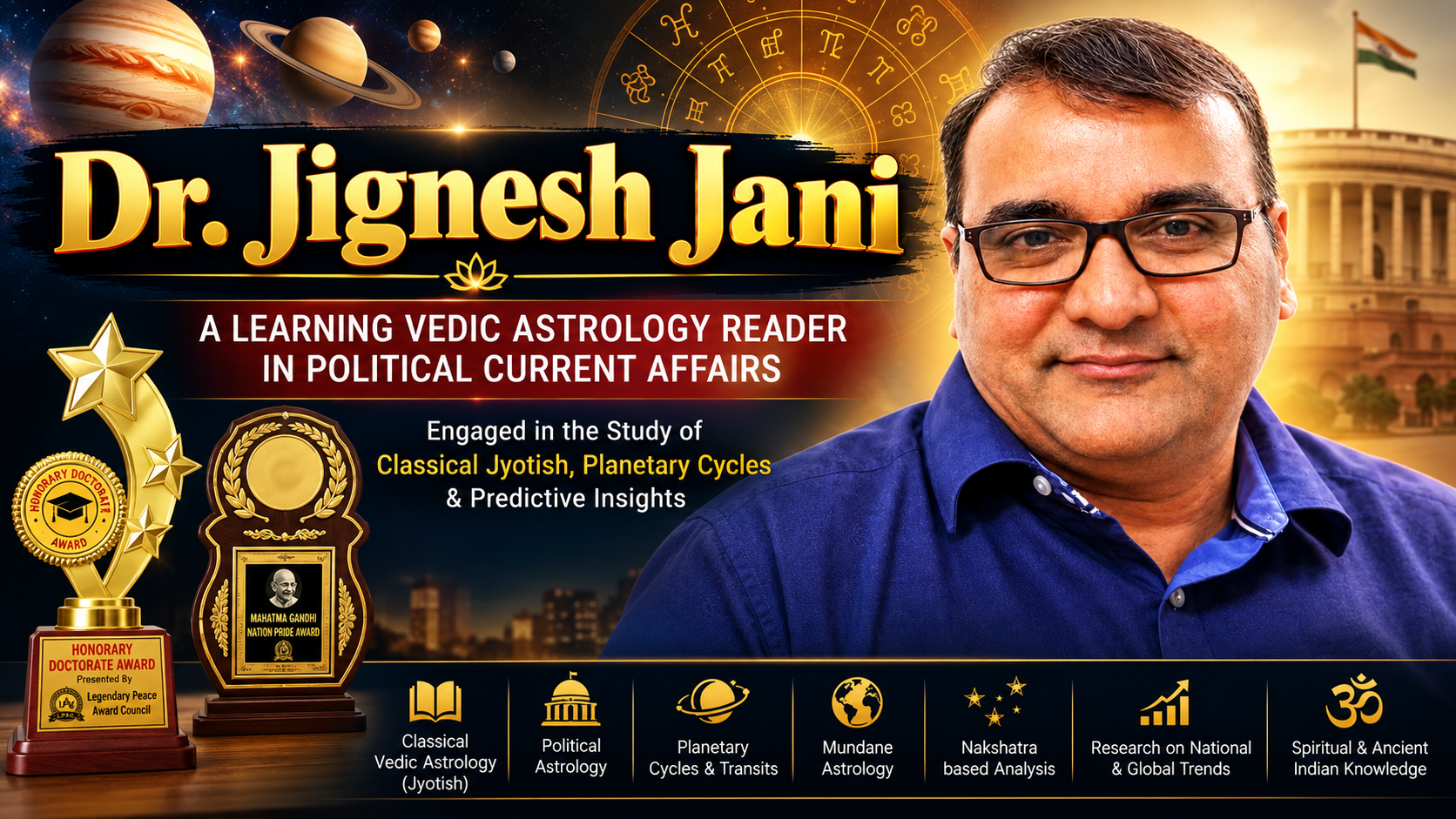
Ahmedabad | July 10, 2026: As geopolitical developments continue to capture global attention, Vedic astrology researcher Jignesh Jani has shared his insights on how traditional planetary cycles are symbolically interpreted within the framework of Vedic astrology. According to Jani, many astrologers view the current period as one of transition, uncertainty, and important decision-making at both national and international levels.
Jani explained that planetary cycles have been studied in Vedic astrology for centuries as symbolic representations of collective trends and societal developments. He noted that the current Mars–Rahu conjunction, known in traditional astrology as Angarak Yoga, is often associated with increased intensity, strategic actions, military preparedness, and heightened geopolitical activity. However, he emphasized that such interpretations should not be viewed as direct predictions of specific events.
The astrologer also highlighted the Saturn–Neptune alignment, which is commonly interpreted by various astrological traditions as symbolizing structural changes, evolving ideologies, and shifts within institutions. According to Jani, many practitioners associate this alignment with periods when nations reassess policies, alliances, and long-term strategic priorities.
At the same time, Jani pointed to Jupiter’s significance in Vedic astrology. Often regarded as a planet representing wisdom, ethics, guidance, and diplomacy, Jupiter is viewed by many astrologers as a balancing influence that encourages peaceful communication and thoughtful leadership during challenging times.
Discussing current global affairs, Jani observed that nations around the world are navigating economic pressures, regional conflicts, technological competition, and changing diplomatic relationships. He believes that astrology can offer a symbolic perspective for understanding these broader cycles while recognizing that practical outcomes are determined by real-world decisions.
“Planetary alignments may be interpreted as reflecting certain themes and possibilities, but they do not dictate the future,” Jani said. “The actions of governments, international institutions, and world leaders remain the most important factors in shaping global outcomes.”
Jani concluded by encouraging responsible discussion of astrology and geopolitics, emphasizing the importance of peace, diplomacy, international cooperation, and evidence-based analysis in addressing the complex challenges facing the world today.